

Employee stress and burnout have become important workplace concerns for organizations seeking to build healthier, more resilient teams. Heavy workloads, constant digital communication, competing priorities, organizational change, and the pressure to remain productive can gradually affect employees’ focus, energy, emotional well-being, and engagement.
For Calgary employers, supporting employee well-being is not simply about offering occasional wellness activities. It is about giving employees practical skills they can use during the workday to manage pressure, regulate their responses, and become more aware of how stress is affecting them.
At the Canadian Mindfulness Research Center (CMRC), our approach to mindfulness training focuses on practical techniques employees can integrate into everyday working life.
What Is Workplace Mindfulness Training?
Workplace mindfulness training teaches employees how to bring greater awareness to their thoughts, emotions, physical sensations, and immediate experience—without automatically reacting to every stressful situation.
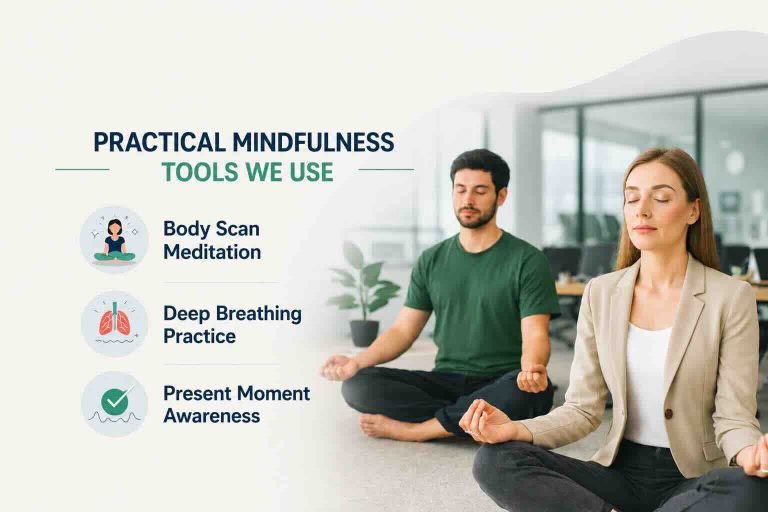
In a workplace setting, mindfulness does not necessarily mean sitting in meditation for long periods. It can include short breathing practices, mindful pauses between meetings, attention-training exercises, body awareness, mindful listening, and techniques for responding more thoughtfully during challenging situations.
The objective is to help employees develop skills they can actually use while working.
How Workplace Stress Can Build Over Time
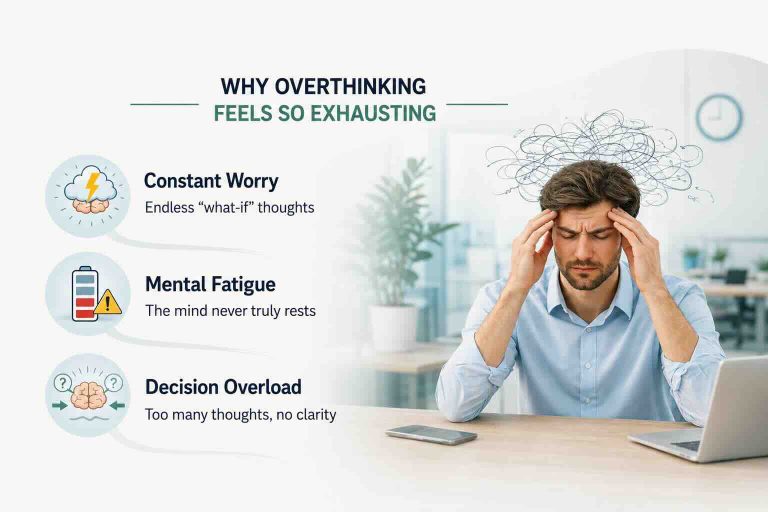
Stress does not always arrive as one major event. It often accumulates gradually.
An employee may move from an early-morning email to meetings, deadlines, messages, difficult conversations, and competing responsibilities with very little mental space between them. Even after work, the mind may continue replaying conversations or thinking about unfinished tasks.
Over time, persistent workplace stress can contribute to exhaustion and make it more difficult for employees to maintain focus and emotional balance.
Mindfulness creates an opportunity to interrupt this automatic cycle.
- Mindfulness Can Help Employees Recognize Stress Earlier
One valuable aspect of mindfulness training is learning to recognize stress signals before they become overwhelming.
Employees can become more aware of changes in breathing, muscle tension, racing thoughts, irritability, difficulty concentrating, or feeling mentally overloaded.
This awareness matters because we cannot respond effectively to something we do not recognize.
A brief mindful pause can allow an employee to notice:
What am I experiencing right now?
That small moment of awareness can create space between experiencing pressure and automatically reacting to it.
- Creating Mental Space During a Busy Workday
Employees do not always need lengthy meditation sessions to incorporate mindfulness into their day.
Consider an employee who has just finished a difficult meeting and has another meeting beginning shortly afterward.
Instead of immediately checking emails or carrying the emotional tension into the next conversation, the employee could take one or two minutes to pause, notice their breathing, release unnecessary physical tension, and intentionally bring attention to the next task.
These small transitions can help employees become more deliberate about where they place their attention.
- Supporting Focus in a Distracted Workplace
Modern employees frequently switch between email, messaging platforms, meetings, notifications, documents, and multiple projects.
Mindfulness training can help employees notice when their attention has wandered and practise deliberately returning it to the task or conversation in front of them.
This is particularly valuable during meetings and interpersonal conversations.
Mindful listening, for example, involves giving another person genuine attention rather than simultaneously preparing a response, checking a device, or thinking about the next task.
Better attention can support clearer communication and more meaningful workplace interactions.
- Building Greater Emotional Resilience
Workplaces inevitably involve uncertainty, changing priorities, deadlines, disagreements, and difficult decisions.
Mindfulness does not eliminate these challenges. Instead, it can help employees become more aware of their emotional reactions and develop a less automatic response to them.
Imagine receiving an email that immediately creates frustration.
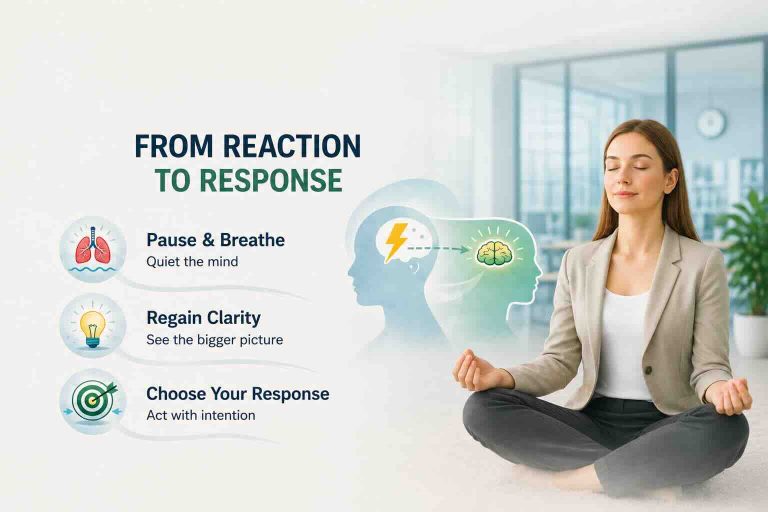
The automatic response may be to reply while still emotionally activated. A mindful response involves recognizing the emotion, pausing, and allowing enough space to decide how to respond more constructively.
That difference between reaction and response is one of the most practical applications of mindfulness in professional environments.
- Mindfulness and Burnout Prevention
Mindfulness should never be presented as the complete solution to workplace burnout.
Burnout can also involve organizational factors such as workload, workplace culture, resources, expectations, leadership practices, and employees’ ability to recover from sustained demands.
Therefore, organizations should not use mindfulness as a substitute for addressing structural workplace problems.
However, mindfulness training can be one component of a broader employee well-being strategy by helping employees develop greater self-awareness, recognize stress patterns, create intentional pauses, and practise healthier ways of responding to pressure.
What Can HR and Wellness Leaders Do?
For HR Managers, Wellness Managers, People & Culture professionals, and organizational leaders, the most useful mindfulness initiatives are often those employees can apply beyond the training room.
Rather than treating mindfulness as a one-time experience, organizations can encourage practical habits such as mindful transitions between meetings, brief breathing pauses, distraction-free listening, intentional breaks, and moments of reflection before important decisions.
Leaders can participate as well. When mindfulness becomes part of workplace behaviour rather than simply another wellness initiative, employees may be more likely to integrate it into their everyday routines.
What Does Corporate Mindfulness Training Look Like?
A workplace mindfulness program can include education alongside practical exercises.
At the Canadian Mindfulness Research Center, training can explore topics such as stress awareness, mindful breathing, attention and focus, emotional regulation, resilience, mindful communication, responding rather than reacting, and applying mindfulness during everyday workplace situations.
The emphasis should remain practical: employees should leave knowing not only what mindfulness is, but also how to use it at work.
Organizations interested in developing these skills can explore our Mindfulness Training in Calgary program.
A Healthier Workplace Starts With Awareness
Employee well-being is influenced by many factors, and no single program can eliminate workplace stress or burnout.
Mindfulness offers something practical: an opportunity to notice what is happening internally before stress automatically determines the next reaction.
One conscious breath before a difficult conversation, one intentional pause between meetings, or one moment of complete attention while listening to a colleague may seem small. Practised consistently, these moments can help cultivate greater awareness, presence, and emotional balance at work.
Looking for Mindfulness Training in Calgary?
The Canadian Mindfulness Research Center provides practical mindfulness training for employees, leaders, businesses, and organizations in Calgary.
Programs can be designed around workplace stress, focus, resilience, emotional well-being, burnout prevention, and the practical application of mindfulness during the working day.
Interested in bringing mindfulness training to your workplace? Explore our Mindfulness Training in Calgary program or contact the Canadian Mindfulness Research Center to discuss your organization’s needs.