

Burnout can leave you feeling exhausted even after a full night’s sleep. Your mind may continue racing when you want to relax, small responsibilities can suddenly feel overwhelming, and you may find it difficult to concentrate, feel motivated, or emotionally disconnect from work.
For many people searching for burnout recovery in Calgary, the challenge is not simply needing more rest. After months or years of chronic workplace stress, the mind and body may become accustomed to operating under constant pressure.
The World Health Organization describes burnout as an occupational phenomenon resulting from chronic workplace stress that has not been successfully managed. Common characteristics include exhaustion, increased mental distance or negativity toward work, and reduced professional effectiveness.
Learning how to recover from burnout therefore requires more than simply pushing yourself to become productive again. Recovery can involve changing your relationship with stress, developing healthier boundaries, restoring periods of genuine rest, and learning practical ways to calm the mind and body.
At the Canadian Mindfulness Research Center in Calgary, mindfulness and meditation are used as practical tools to help individuals become more aware of stress patterns and develop healthier responses to pressure.
Here are seven practical steps that can support burnout recovery.
- Recognize the Signs of Burnout
Recovery begins with awareness.
Burnout symptoms may include:
- Persistent physical or mental exhaustion
- Difficulty concentrating
- Irritability or emotional reactivity
- Loss of motivation
- Feeling detached from your work
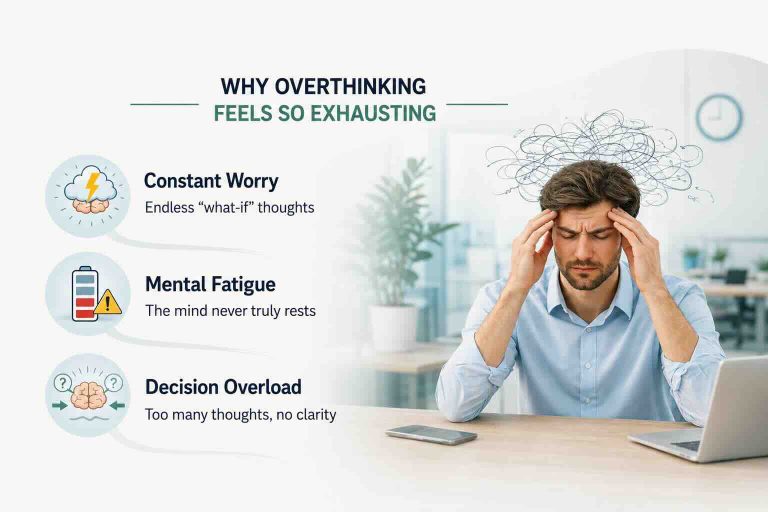
- Constant overthinking
- Difficulty relaxing after work
- Reduced productivity
- Poor work-life balance
Instead of immediately trying to eliminate these experiences, begin by noticing them.
Ask yourself:
What situations repeatedly drain my energy?
Understanding your personal stress patterns can help you identify where change is needed.
- Create Small Moments of Nervous System Regulation
When you are experiencing chronic stress, constantly moving from one responsibility to another can make it difficult to mentally disengage.
Try introducing short pauses throughout your day.
For example, stop for one or two minutes, relax your shoulders, notice your breathing, and bring your attention to physical sensations in your body.
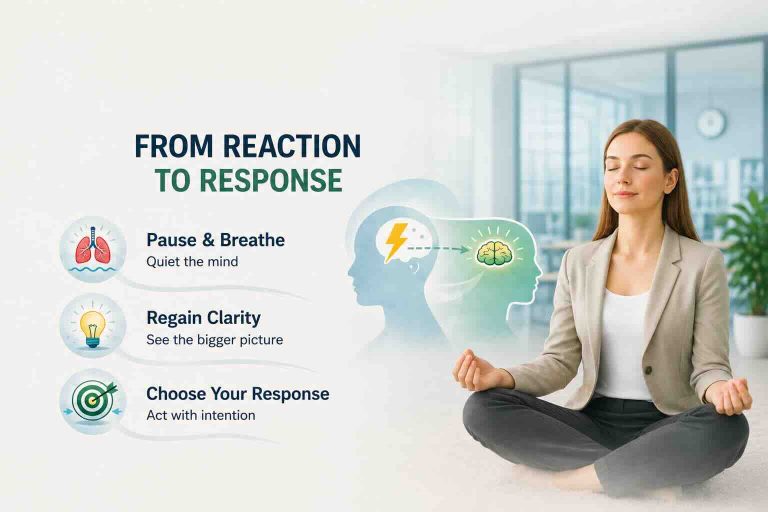
The purpose is not to force yourself to become calm. It is to interrupt the automatic cycle of rushing, thinking, reacting, and doing.
These small moments can become an important part of nervous system regulation and chronic stress recovery.
- Use Your Breath as an Anchor
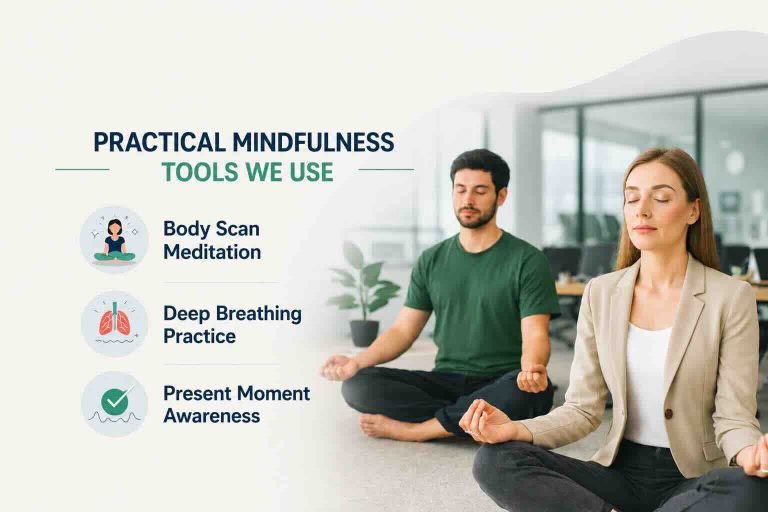
Breathing meditation is one of the simplest mindfulness practices you can use during burnout recovery.
Sit comfortably and allow your breathing to remain natural.
Notice one inhalation.
Notice one exhalation.
When your mind begins thinking about work, responsibilities, problems, or tomorrow’s schedule, acknowledge that the mind has wandered and gently return your attention to your breath.
Even a few minutes can provide an opportunity to step out of automatic mental activity.
The goal of meditation is not to stop thoughts. Instead, you are learning that you do not have to automatically follow every thought that appears.
- Practice Mindfulness During Everyday Activities
You don’t always need to sit with your eyes closed to practice mindfulness.
Choose an ordinary activity such as walking, drinking tea, eating lunch, or taking a shower.
For a few minutes, experience the activity directly rather than simultaneously checking your phone, planning your next task, or thinking about work.
This type of mindfulness for burnout can help bring your attention back to the present moment.
Over time, you begin recognizing when your mind is entering unnecessary cycles of worry, overthinking, or emotional reaction.
- Establish Healthier Work Boundaries
Meditation can help you respond differently to stress, but it cannot remove an unhealthy workload or workplace environment.
Burnout recovery may also require practical changes.
Consider whether you are regularly answering emails after work, skipping breaks, accepting responsibilities beyond your capacity, or mentally carrying work throughout the evening.
Create a clear transition between your professional and personal life.
That might mean taking a short walk after work, turning off work notifications at a certain time, or spending ten minutes practicing meditation before beginning your evening.
Healthy boundaries are an important part of workplace burnout recovery and burnout prevention.
- Replace Self-Criticism With Self-Compassion
People experiencing burnout sometimes become frustrated with themselves.
You might think:
“Why can’t I handle this anymore?”
“I should be more productive.”
“Other people seem to manage everything.”
These thoughts can create another layer of emotional pressure.
Mindfulness allows you to notice self-critical thinking without automatically accepting it as truth.
Self-compassion encourages a different question:
What do I genuinely need right now to recover?
Burnout recovery is not a competition. Giving yourself permission to recover gradually can help you develop a more sustainable relationship with work, expectations, and yourself.
- Develop a Consistent Meditation Practice
Consistency is more valuable than intensity.
You do not necessarily need to meditate for an hour every day.
Start with five or ten minutes.
A regular meditation for burnout and stress practice can help you become more aware of thoughts, emotions, physical tension, and automatic reactions.
As awareness develops, you may begin noticing stress earlier rather than waiting until you are completely overwhelmed.
This is one reason mindfulness and meditation can become valuable components of a longer-term burnout recovery and stress management strategy.
Case Study: From Constant Mental Pressure to Greater Awareness
One professional came to mindfulness training after experiencing prolonged workplace pressure. Even after finishing work, their mind remained occupied with deadlines, conversations, responsibilities, and the next day’s tasks.
Rather than beginning with long meditation sessions, we focused on simple practices: observing the breath, recognizing physical tension, taking mindful pauses during the workday, and creating a clearer transition between work and home.
Gradually, the individual became better at recognizing stress before automatically reacting to it.
The most meaningful change was not that stressful situations completely disappeared. Instead, the person developed greater awareness of their internal reactions and learned how to pause before becoming overwhelmed.
This example is illustrative of the type of experience addressed through mindfulness training; individual results vary.
How the Canadian Mindfulness Research Center Can Help
If you are experiencing ongoing emotional exhaustion, workplace stress, overthinking, or difficulty disconnecting from work, you do not have to rely solely on temporary relaxation.
At the Canadian Mindfulness Research Center, our Burnout Recovery Program in Calgary combines practical mindfulness training, meditation, breathing awareness, nervous system regulation practices, stress management techniques, and strategies for developing greater emotional balance and resilience.
The objective is not simply to help you relax for an hour. It is to help you develop practical skills that can be integrated into your everyday life.
Explore our Burnout Recovery Program in Calgary to learn more about personalized support for chronic stress and workplace burnout.
Frequently Asked Questions
- How long does it take to recover from burnout?
There is no universal timeline. Burnout recovery depends on factors such as the duration and intensity of workplace stress, workload, sleep, lifestyle, available support, and whether the underlying sources of stress change. Sustainable recovery should be approached gradually rather than rushed.
- Can meditation help with burnout?
Meditation can be a useful part of a broader burnout recovery strategy. Mindfulness meditation helps develop awareness of thoughts, emotions, tension, and automatic reactions. It can also create intentional periods of mental rest. However, meditation should complement—not replace—necessary changes to workload, workplace conditions, rest, professional care, or other sources of chronic stress.
- Where can I find burnout recovery support in Calgary?
The Canadian Mindfulness Research Center in Calgary offers mindfulness and meditation-based support for individuals experiencing workplace stress, emotional exhaustion, overthinking, and burnout. Our Burnout Recovery Program focuses on practical skills that can be applied both at work and in everyday life.